
MCT & THE MIND | PART 1
YOUR BRAIN DOES MORE THAN REMEMBER
by Monolith’s In-House Nutritionist
When we hear the words “cognitive health,” most of us picture an older adult trying to recall a forgotten name or locate their keys.
But cognition is much broader than memory, and it matters at every age.
For a student, it includes concentrating during class and retrieving information during an examination. For an executive, it means remaining mentally flexible, processing information, and making sound decisions under pressure. And as we grow older, cognitive health becomes increasingly important for maintaining confidence and independence.
THE DIFFERENT SIDES OF COGNITION
Cognitive health includes:
Attention: Staying focused without becoming distracted.
Working memory: Holding and using information temporarily.
Processing speed: Understanding and responding efficiently.
Executive function: Planning, organising and making decisions.
Learning and memory: Absorbing, storing and retrieving information.
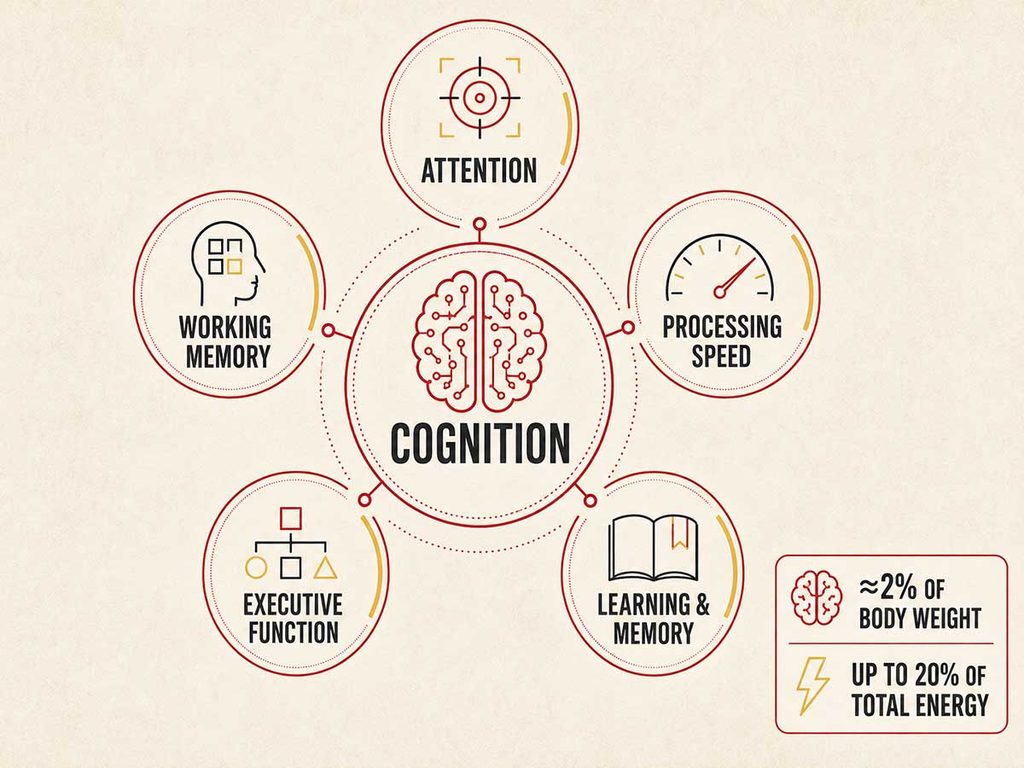
The brain is not simply a storage room; it is a constantly active control centre. While your brain accounts for only about 2% of your body weight, it consumes up to 20% of your body’s total energy. All of this complex cognitive activity requires a massive, continuous supply of fuel.
WHERE DOES MCT FIT?
The brain normally relies heavily on glucose for this energy. However, drops in blood sugar, skipped meals, or natural age-related declines can impair how well the brain utilizes glucose, leading to cognitive fatigue.
Medium-chain triglycerides, or MCTs, are a unique type of dietary fat that bypass normal fat digestion. They travel directly via the portal vein to the liver where they are rapidly processed and oxidized for energy. Part of the MCTs are converted into ketones, which travel through the bloodstream, quickly cross the blood-brain barrier, and are used directly by the brain to produce energy.
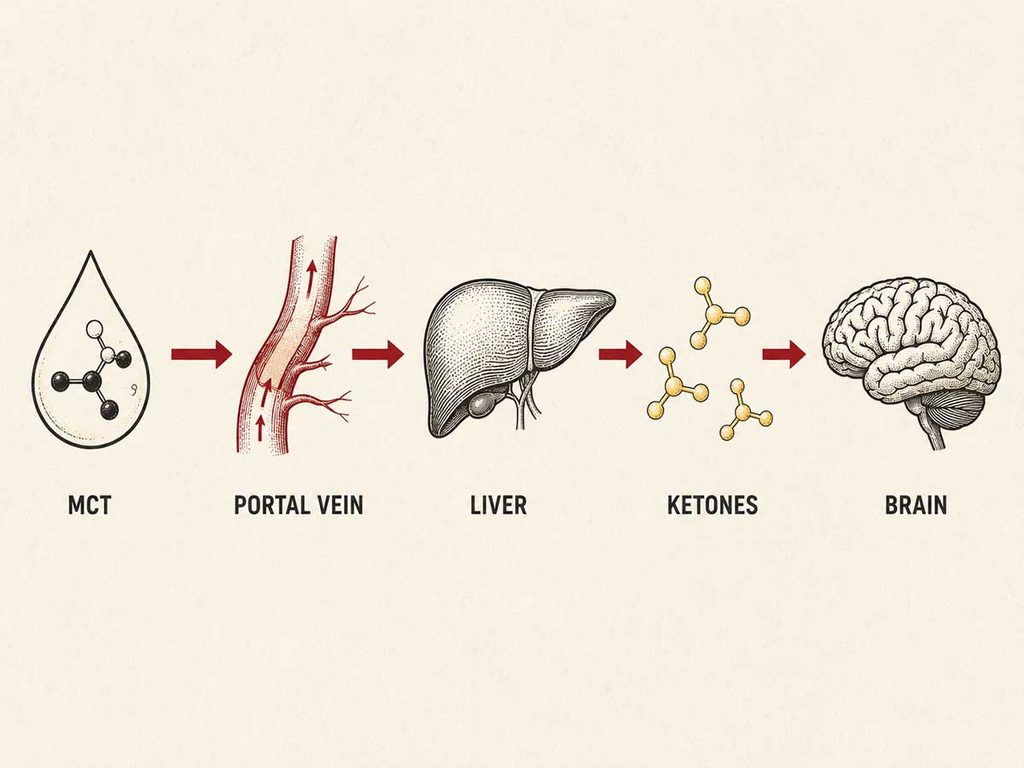
MCT → ketones → an highly efficient additional fuel option for the brain
However, providing another fuel does not automatically make someone smarter.
MCT is not a stimulant like caffeine, and not everyone will experience an immediate improvement in mental clarity. Current research is most encouraging for older adults and people whose brains may be losing the ability to use glucose efficiently, a process often referred to as “ketone rescue”. While there are promising clinical trials showing that a single dose or a 4-week daily regimen of MCTs can boost working memory and inhibitory control in healthy young adults, the overall evidence in this younger demographic remains more limited.
Over the coming months, this 12-part series will examine whether MCT could support students, executives, healthy older adults and people experiencing cognitive decline—while separating realistic possibilities from exaggerated promises.
MCT is not “magic brain oil.” It is a powerful, alternative source of brain energy—and an intriguing subject for cognitive-health research.
Which aspect of cognitive health matters most to you: concentration, memory, mental speed or mental stamina? Let us know in the comments!

NEXT MONTH: How can dietary fat be transformed into fuel for the brain?
REFERENCES
Neuroketotherapeutics and Cognitive Health: An In-Depth Clinical, Molecular, and Genetic Review of Medium-Chain Triglyceride Metabolism. (2026). MDPI.
Yu, Y., Ya, W., Zhang, J., Wang, J., Sun, B. (2026). Recent Advances in Medium-Chain Triglycerides in Chronic Disease Prevention. Nutrients, 18(13), 2133.
Fan, L., Zhu, X., Borenstein, A. R., Huang, X., Shrubsole, M. J., Dugan, L. L., & Dai, Q. (2023). Association of Circulating Caprylic Acid with Risk of Mild Cognitive Impairment and Alzheimer’s Disease in the Alzheimer’s Disease Neuroimaging Initiative (ADNI) Cohort. The Journal of Prevention of Alzheimer’s Disease, 10(3), 513–522.
MCT Oil Benefits: What the Science Actually Shows. (2026). Bulletproof.
Yuuki, I. W., Dora, K., Matsumura, T., Fukuzawa, K., Murakami, Y., Hashimoto, K., Tsukamoto, H., & Hashimoto, T. (2026). Both a single dose and a 4-week daily regimen of medium-chain triglycerides boost certain aspects of cognitive function in young adults: A randomized controlled trial. Physiology & Behavior, 305, 115212.